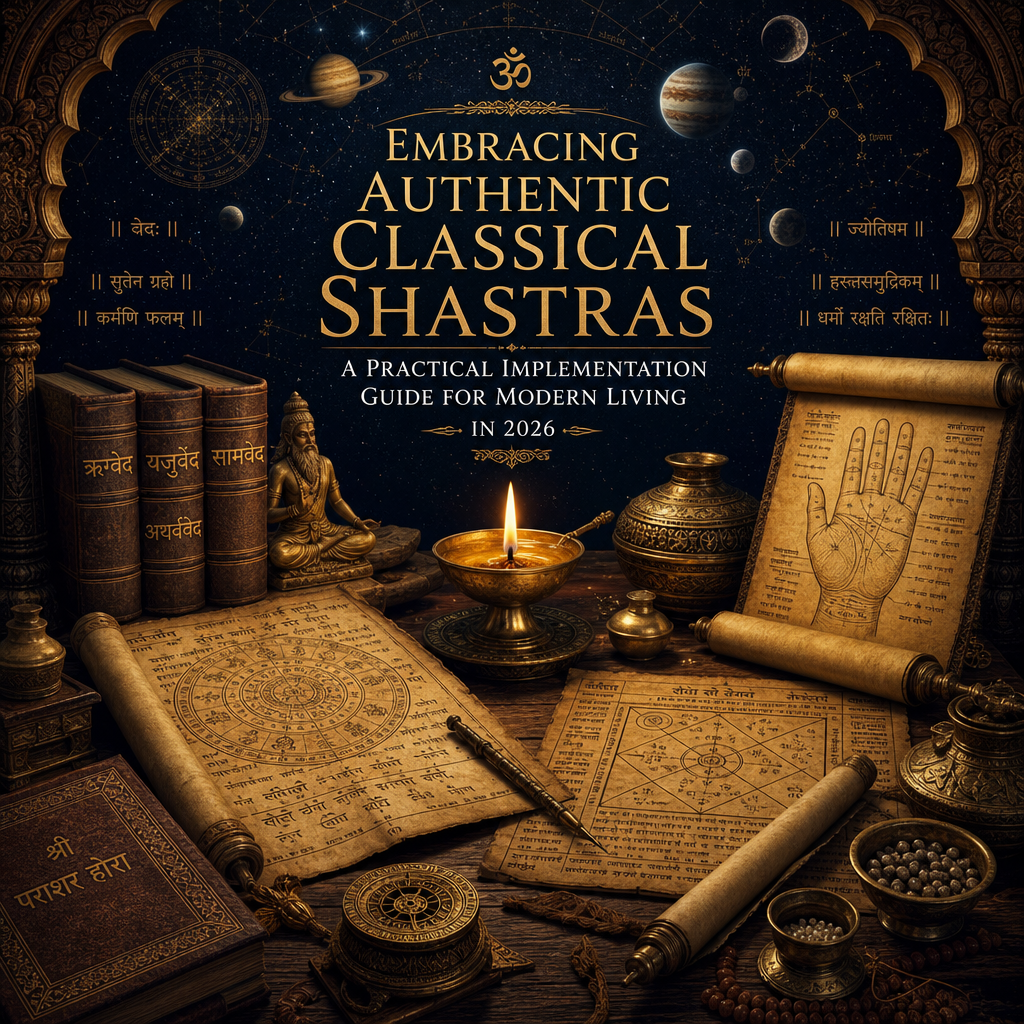
The classical Shastras are ancient texts that form the bedrock of Indian philosophical, spiritual, and scientific thought. These sacred scriptures, such as the Vedas, Upanishads, and Puranas, have been integral in shaping the cultural and moral fabric of India for millennia. In 2026, their relevance continues to grow as individuals seek deeper connections amidst modern complexities.
Contemporary Relevance in 2026
In today’s fast-paced world, the synthesis of classical Shastras offers a pathway to integrate ancient wisdom into our daily lives, addressing contemporary challenges such as stress, identity crises, and ecological imbalance. By embracing these timeless teachings, individuals can achieve greater harmony and purpose, aligning with the natural rhythms of life. Scholarly research and documented classical archives on this tradition are cataloged by Encyclopaedia Britannica historical research.
The core tenets of classical Shastras revolve around the concepts of Dharma (duty/righteousness), Karma (action/consequence), and Moksha (liberation). These principles guide individuals in cultivating a balanced life, emphasizing ethical conduct and spiritual growth. The energetic mechanics of the universe, as outlined in these texts, underscore the interconnectedness of all existence. For deeper guidance and cosmic insights, explore our comprehensive reading on Unlocking Personal Insights: A Deep Dive into Sub-Millimeter Palm Geometry with AI Palmist.
Classical Shastras and Their Sacred Texts
Key texts such as the Bhagavad Gita, Manusmriti, and the Yoga Sutras provide detailed instructions for living in alignment with cosmic laws. These scriptures serve as manuals for understanding the human condition and the divine, offering profound insights into the pursuit of knowledge and the practice of meditation and self-discipline.
To synthesize the teachings of classical Shastras into modern living, it is essential to adopt a holistic approach. This involves studying the texts with a focus on personal applicability, engaging in regular meditation, and practicing yoga to harmonize the body and mind.
Interpretive Frameworks and Analytical Procedures
Interpreting classical Shastras requires an understanding of the symbolic language and metaphors used in these texts. Analytical frameworks such as the Triguna theory (Sattva, Rajas, Tamas) and the Panchakosha model (five sheaths of existence) provide practical tools for introspection and self-analysis, aiding in the cultivation of self-awareness and personal growth. Historical manuscripts and philosophical foundations are extensively referenced in Stanford Encyclopedia of Philosophy.
Key Insight: Regular engagement with classical Shastras, supported by meditative practices, facilitates a deeper understanding of one’s life purpose and cosmic role.
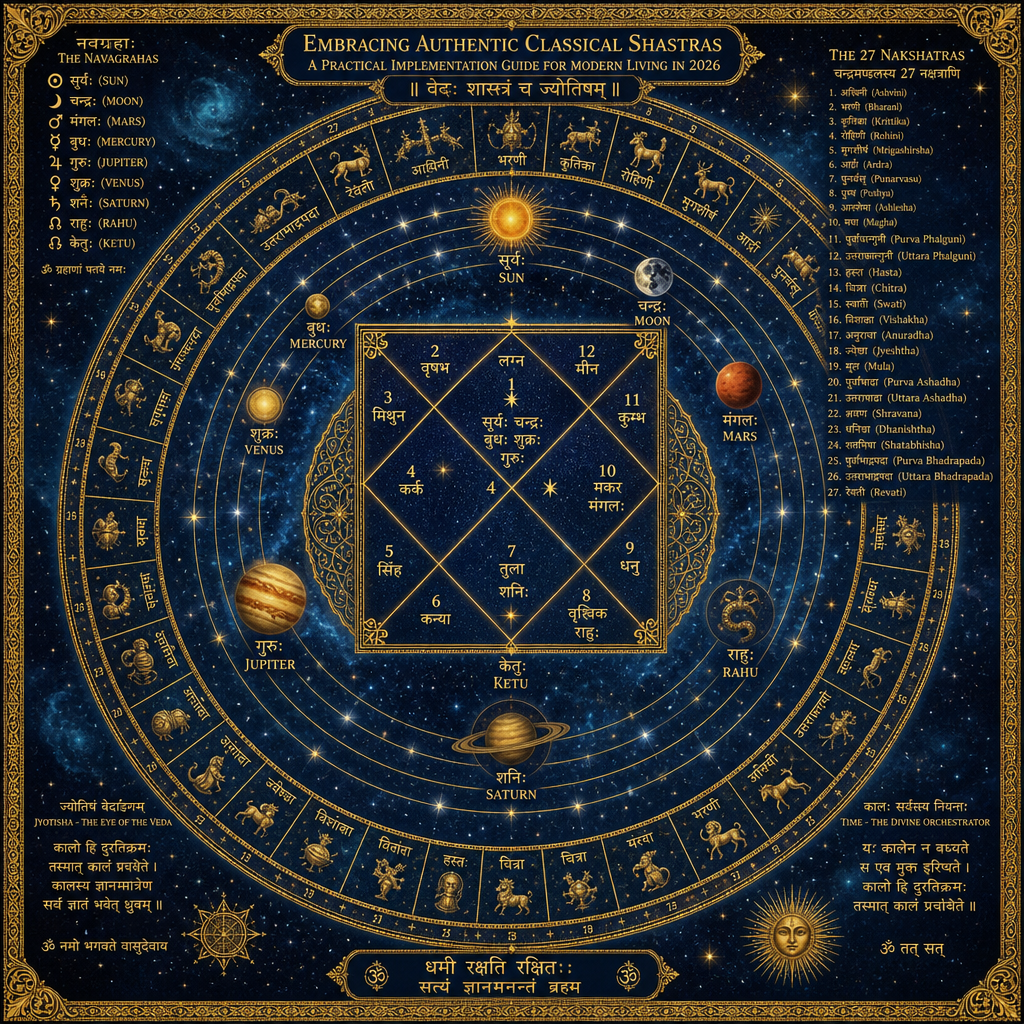
The subtleties of classical Shastra synthesis involve understanding the influence of Nakshatras (lunar constellations) and planetary dynamics on individual destinies. Each Nakshatra carries specific attributes that affect personality traits and life events, offering valuable insights for personal development. Seekers exploring related energetic dynamics should also consult our detailed analysis on Unlocking Relationship Timing: A Practical Guide for Effective Vedic Guidance in 2026.
Individual Chart Variables and Astrological Insights
Astrological charts are vital tools in the application of classical Shastras. By analyzing planetary positions and their interactions, one can gain insights into karmic patterns and life lessons. This personalized approach enables individuals to navigate life’s challenges more effectively and align with their soul’s journey.
5. Practical Benefits, Spiritual Guidance & Life Impact
Real-World Life Alignment and Psychological Self-Awareness
Embracing classical Shastras provides numerous practical benefits, including enhanced mental clarity, emotional resilience, and a deeper sense of fulfillment. By fostering self-awareness, individuals can make informed decisions that align with their true nature, leading to a more balanced and purposeful life.
Transformative Value and Spiritual Alignment
The spiritual guidance offered by classical Shastras encourages individuals to transcend ego-driven desires and cultivate virtues such as compassion, patience, and humility. This transformative process fosters inner peace and alignment with the divine, facilitating a harmonious existence in a rapidly changing world. For academic perspectives and cross-cultural lineage documentation, consult Library of Congress archival collections.
6. Real-World Case Study & Transformational Journey
Individual Consultation Scenario
Consider the journey of Anjali, a young professional in Mumbai experiencing career dissatisfaction despite substantial achievements. Through a consultation based on classical Shastras, Anjali discovered that her career misalignment stemmed from unaddressed karmic patterns and a lack of spiritual fulfillment.
Karmic Challenges, Remedial Approaches, and Life Transformation
By exploring her astrological chart, Anjali identified planetary influences that highlighted her need for creative expression and community service. Employing remedial measures such as mantra chanting and volunteering, she gradually realigned her career path, embracing roles that allowed her to express her creativity and serve others. This journey not only enhanced her professional satisfaction but also deepened her spiritual awareness. To further understand your life path and classical planetary influences, review our guide on Navigating Career Success: A Step-by-Step Framework Using Vedic Astrology for 2026.
To implement the teachings of classical Shastras, individuals can adopt daily disciplines such as meditation, yoga, and mindful living. These practices help attune the mind and body to cosmic energies, fostering a state of equilibrium and clarity.
Mantras, Mindfulness, and Conscious Daily Actions
Chanting specific mantras, chosen based on one’s astrological chart, can mitigate negative influences and enhance positive traits. By incorporating mindfulness into everyday activities, individuals can cultivate present-moment awareness and make conscious choices that reflect their spiritual goals. Comparative historical records and foundational treatises can be examined through Oxford Reference classical studies.
8. Common Mistakes, Misconceptions & Critical Pitfalls to Avoid
Avoiding Fatalism and Superstitions
One common pitfall in interpreting classical Shastras is the tendency towards fatalism, where individuals resign to perceived predestinations. It is crucial to recognize that while astrological influences provide guidance, free will remains a powerful tool for personal growth and transformation.
Common Interpretive Errors and Ethical Precautions
Misinterpretations can arise from a superficial reading of texts or reliance on unverified sources. Ethical precautions involve engaging with knowledgeable practitioners and cross-referencing interpretations with established commentaries to ensure accuracy and integrity in application.
9. Frequently Asked Questions (FAQ)
What are classical Shastras, and why are they important today?
Classical Shastras are ancient scriptures that encompass a wide range of disciplines, including philosophy, science, art, and spirituality. They are important today as they offer timeless wisdom that addresses modern life’s complexities, providing frameworks for ethical living, personal development, and spiritual enlightenment.
How can classical Shastras be integrated into modern life?
Integrating classical Shastras into modern life involves studying these texts, reflecting on their teachings, and applying their principles through daily practices such as meditation and yoga. This integration helps individuals navigate contemporary challenges with greater clarity and purpose.
What role do planetary influences play in classical Shastra synthesis?
Planetary influences, as interpreted through astrology, play a significant role in classical Shastra synthesis by offering insights into individual karmic patterns and life paths. Understanding these influences allows individuals to align their actions with cosmic rhythms, enhancing personal growth and spiritual alignment.
Can classical Shastras help in personal growth and overcoming challenges?
Yes, classical Shastras provide valuable tools for personal growth by promoting self-awareness, ethical conduct, and spiritual development. By addressing challenges through the lens of these teachings, individuals can transform obstacles into opportunities for growth and transformation.
What are some common misconceptions about classical Shastras?
Common misconceptions about classical Shastras include viewing them as outdated or irrelevant in today’s world. In reality, these texts offer profound insights into human nature and the universe, serving as a guide for living a balanced and meaningful life.
10. Conclusion and Spiritual Roadmap for 2026
As we embrace 2026, the synthesis of classical Shastras offers a beacon of light amid the complexities of modern existence. By integrating their teachings into our lives, we can navigate personal growth, overcome contemporary challenges, and achieve spiritual alignment. At ai_rekha_gyan, we are committed to guiding seekers on this transformative journey, helping them unlock the ancient wisdom within and manifest a life of purpose and fulfillment.