
1. The Cosmic Tapestry: Foundations of Vedic Astrology (Jyotisha) in 2026
In 2026, as humanity navigates rapid technological accelerations and profound existential inquiries, the ancient science of Vedic Astrology (known traditionally in Sanskrit as Jyotisha, “the science of light”) provides an enduring beacon of clarity. Far from being a fatalistic fortune-telling system, Vedic astrology is a sophisticated, mathematically rigorous discipline rooted in the sacred Vedas—specifically the Vedangas. It views the cosmos not as inert matter, but as an interconnected web of consciousness where macrocosmic planetary cycles mirror microcosmic human karma.
The core premise of Vedic astrology is the law of karma and reincarnation: the planetary configurations at the exact moment and geographical coordinates of an individual’s birth represent the soul’s energetic blueprint (Prarabdha Karma). In the modern era, seekers increasingly turn to Vedic astrology not merely to predict external events, but to understand behavioral archetypes, psychological predispositions, spiritual dharma, and optimal timing for major life transitions.
2. Grahas, Rasis & Nakshatras: The Sacred Triad of Astrological Analysis
Every comprehensive Vedic birth chart (Kundali or Janam Patri) is synthesized from three foundational pillars that define the individual’s spiritual and psychological constitution:
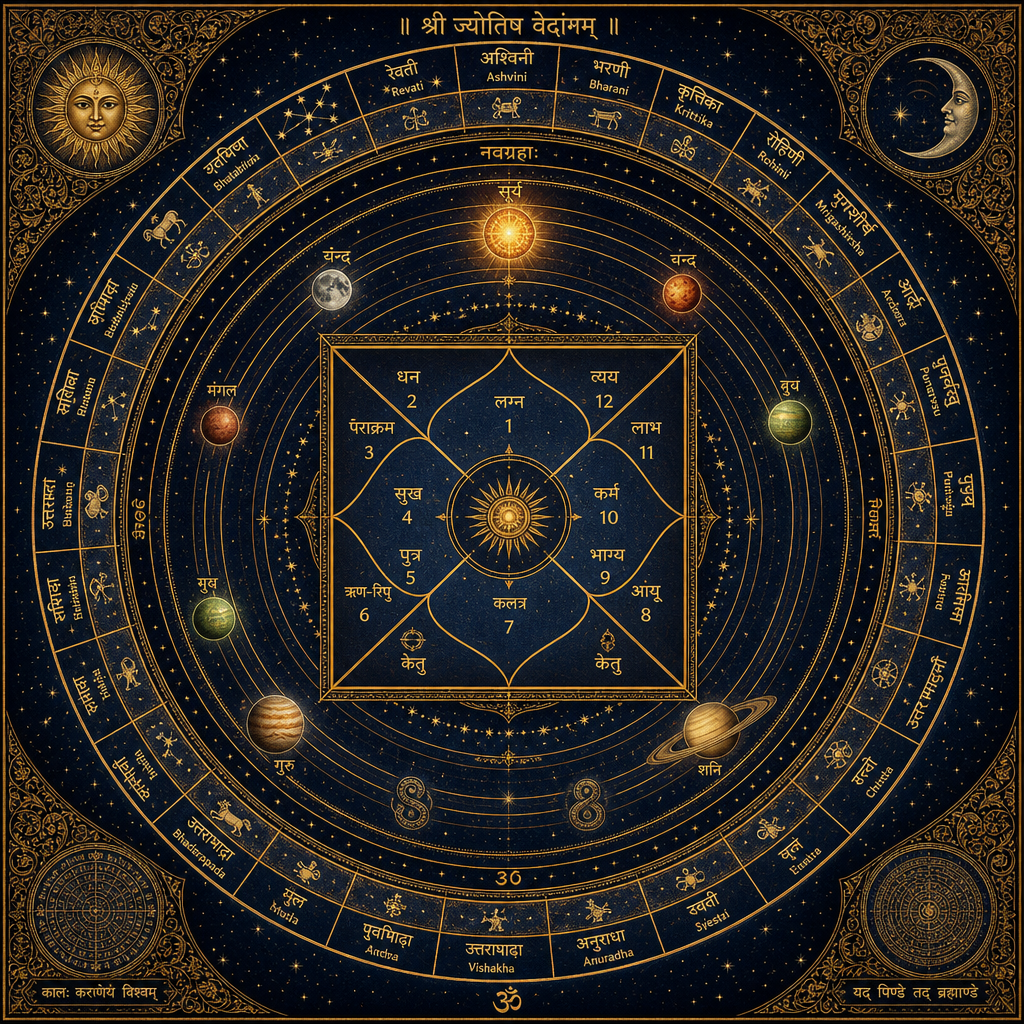
- The Nine Grahas (Cosmic Influencers): Surya (Sun/Soul), Chandra (Moon/Mind & Emotions), Mangala (Mars/Energy & Drive), Budha (Mercury/Intellect & Communication), Guru (Jupiter/Wisdom & Fortune), Shukra (Venus/Love & Aesthetics), Shani (Saturn/Discipline & Karma), and the shadowy karmic lunar nodes Rahu (North Node/Desire & Innovation) and Ketu (South Node/Detachment & Spirituality).
- The Twelve Rasis (Sidereal Zodiac Signs): Unlike Western tropical astrology which aligns with the vernal equinox, Vedic astrology utilizes the Nirayana (sidereal) zodiac. By accounting for the precession of the equinoxes (Ayanamsha, typically Lahiri), Vedic positions reflect the exact physical background of fixed constellations in the night sky.
- The 27 Nakshatras (Lunar Mansions): The true heartbeat of predictive Jyotish. Each 13°20′ segment of the ecliptic is governed by a deity and planetary ruler, dividing human personality and karmic timing into profound micro-dimensions that far surpass basic sun-sign generalizations.
As documented in scholarly research on classical Indian astronomy available through Encyclopaedia Britannica’s Indian Astrology Archive, the sidereal precision and Nakshatra framework developed over three millennia provide the structural bedrock for calculating human life cycles.
3. The Dasha System: Decoding Vimshottari Timeline & Karmic Unfolding
The defining technological and philosophical triumph of Vedic astrology over all other cosmological systems is the Dasha system, primarily the 120-year Vimshottari Dasha. While a natal chart reveals the innate potential of an individual’s life, the Dashas explain when specific potentials will fructify into physical reality.
Calculated precisely from the longitude of the natal Moon at the time of birth, the Vimshottari Dasha sequences through planetary periods (Mahadashas) and sub-periods (Antardashas and Pratyantardashas). During a Jupiter Mahadasha, themes of wisdom, mentorship, higher education, expansion, and ethics dominate. Conversely, entering a Saturn Mahadasha demands rigorous discipline, restructuring, patience, and the repayment of lingering karmic obligations.
4. Navamsha (D9) & Divisional Charts: Unlocking Soul Destiny
In orthodox Jyotish practice, an astrologer never renders a judgment based solely on the primary birth chart (Rasi Chart / D1). The Rasi chart represents the physical canopy of life, whereas the Varga (divisional) charts reveal the subtle soul dimensions beneath the surface.
Foremost among these is the Navamsha (D9) chart, generated by dividing each zodiac sign into nine equal segments of 3°20′. The Navamsha illuminates:
- Dharmic Destiny: The deeper life purpose that awakens predominantly in the second half of life (post-age 30-36).
- True Planetary Strength (Vargottama): A planet occupying the exact same sign in both the D1 and D9 charts gains tremendous auspicious power, capable of bestowing exceptional results.
- Spouse & Sacred Partnerships: The 7th house and Venus/Jupiter in the Navamsha illustrate the spiritual temperament, marital harmony, and shared karmic path of life partners.
5. Gochar (Transits) in 2026: Navigating Saturn, Jupiter & Rahu-Ketu Shifts
While the internal karmic clock is regulated by the Dasha timeline, the external environment is shaped by Gochar (planetary transits) through the sidereal heavens. In 2026, several momentous planetary movements govern collective and personal destinies:
Saturn’s Movement: As Saturn progresses through the culminating degrees of Aquarius into Pisces, collective structures undergo profound spiritual and compassionate reassessments. On an individual level, Moon signs undergoing Sade Sati (the 7.5-year transit of Saturn over the 12th, 1st, and 2nd houses from natal Moon) experience intensive self-purification, ego-dissolution, and foundational restructuring.
Jupiter’s Auspicious Radiance: Jupiter’s expansive transit activates deep learning, philosophical revival, and ethical leadership. For natives with supportive natal placements, Jupiterian aspects grant protection, divine grace (Guru Kripa), and clarity amidst worldly turbulence.
According to classical philosophical principles cataloged in the Stanford Encyclopedia of Philosophy’s Indian Cosmology Studies, understanding these overarching astronomical cycles allows human beings to cooperate consciously with universal rhythm rather than fighting against inevitable cosmic seasons.
6. In-Depth Consultation Case Study: Karmic Resolution During Saturn Sade Sati
To understand how Vedic astrology functions practically, consider the case of a 38-year-old software architect and entrepreneur based in Bengaluru (Vedic Moon in Aquarius, Leo Ascendant) who consulted an experienced Vedic practitioner during late 2024.
The Dilemma: The native was facing sudden executive burnout, partner disputes, and intense psychological anxiety despite external financial stability. A superficial review might have attributed this solely to occupational stress.
Astrological Diagnostics:
Examination of the native’s chart revealed that they had simultaneously entered the peak phase of Sade Sati (Saturn transiting the natal Moon in Aquarius) while running a Mars-Rahu Antardasha in the 8th house of chronic upheaval. This confluence created an acute psychological pressure-cooker designed to dismantle unhealthy ego attachments and unsustainable workaholic habits.
The Prescribed Vedic Protocol:
Rather than promising magical shortcuts, the astrologer instituted a holistic remedial discipline:
1. Daily Sadhana: Recitation of the Hanuman Chalisa at sunrise and Maha Mrityunjaya Mantra at dusk to calm the agitated Manas (Moon).
2. Karmic Alms (Daan): Offering black sesame seeds and providing meals to underprivileged laborers on Saturday evenings to honor Shani Deva.
3. Lifestyle Realignment: Transitioning from aggressive competitive expansion to sustainable, service-oriented leadership and mentorship.
The Outcome: Over an 18-month timeline, the native dissolved toxic partnerships without litigation, founded an ethical technological consultancy, and reported the deepest mental peace and familial harmony experienced in over a decade. The transit did not destroy them; it forged them into a wiser, grounded leader.
7. Authentic Vedic Remedies (Upayas): Mantras, Gemstones, Daan & Spiritual Discipline
One of the most compassionate dimensions of Vedic astrology is the science of Upayas (remedial measures). Jyotish holds that while past karma generated present tendencies, conscious spiritual action (Kriyaman Karma) has the power to mitigate or transform negative astrological afflictions.
- Mantra Japa (Sound Frequency Therapy): Sacred Vedic and Tantric sound vibrations attune the subtle nervous system and energy chakras to specific planetary archetypes. Chanting the planetary Gayatri or Beeja mantras with sincere devotion produces verifiable psychophysiological tranquility.
- Dana (Sacrificial Charity): Giving alms corresponding to challenging planets directly neutralizes karmic debts. Feeding stray animals, supporting orphanages, and planting medicinal trees are recognized in classical Shastras as powerful neutralizing agents.
- Yantras and Sacred Geometry: Geometrical representations inscribed on copper or silver act as focal points for meditation and cosmic resonance, stabilizing home environments (Vastu Shastra synergy).
- Ratna Dharana (Gemstone Science): Prescribed strictly for functional benefic planets in the natal chart. Wearing untreated, natural gemstones (such as Blue Sapphire, Yellow Sapphire, or Ruby) enhances planetary currents and must be calibrated with rigorous caution.
8. 5 Critical Misconceptions & Common Pitfalls to Avoid
As interest in astrology expands worldwide, seekers must exercise discernment to avoid sensationalist superstitions that distort the sacred science:
- The Fallacy of Absolute Fatalism: Jyotish does not advocate that human beings are puppets of the stars. The chart shows the hand of cards dealt by past karma; free will (Purushartha) dictates how wisely those cards are played.
- Demonizing Malefic Planets: Saturn, Mars, Rahu, and Ketu are not “evil.” They are strict cosmic taskmasters that burn away illusions, foster spiritual resilience, and cultivate genuine mastery. Without Saturn’s restraint, Jupiter’s benevolence becomes unchecked indulgence.
- Blindly Wearing Gemstones for Malefic Planets: Wearing a gemstone for an inherently malefic or afflicted planet often amplifies the affliction. Gemstones must be prescribed only after analyzing Ascendant lordship and Shadbala planetary strength.
- Treating Manglik Dosha as a Marriage Curse: Millions suffer needless anxiety over Manglik Dosha (Mars in houses 1, 2, 4, 7, 8, or 12). In reality, over 70% of charts possess classical cancellations (Nirvritti) that neutralize the condition entirely.
- Relying on Generic Computer Horoscopes: Automated sun-sign snippets lack the dimensional nuance of the D9 chart, Vimshottari balance, and Ashtakavarga points essential for real predictive accuracy.
9. Frequently Asked Questions (FAQ)
What is the primary difference between Vedic astrology and Western astrology?
The primary technical difference lies in the zodiac framework. Western astrology uses the Tropical zodiac, which is based on the Earth-Sun relationship and the seasons (vernal equinox). Vedic astrology uses the Sidereal zodiac (Nirayana), which measures planetary positions against the actual astronomical backdrop of fixed constellations. Due to the precession of the equinoxes, there is currently an offset of approximately 24 degrees between the two systems. Furthermore, Vedic astrology features the unique Nakshatra system and predictive Dasha timelines that do not exist in Western astrology.
Can Vedic astrology accurately predict the exact date of future life events?
Vedic astrology identifies energetic windows and karmic probabilities with remarkable precision through the dual alignment of Dashas and Gochar (transits). However, ethical classical texts state that exact timing is subject to human free will and divine grace. Astrological forecasts should be utilized as navigational weather reports, empowering individuals to take proactive action rather than passively waiting for fate.
How does Palmistry (Hasta Rekha Shastra) correlate with Vedic Astrology?
In classical Indian tradition, Palmistry (Samudrika Shastra) is an organic sister discipline to Jyotisha. The hands represent a living, dynamic micro-manifestation of the birth chart. While the natal chart reflects the birth promise, the lines, mounts, and symbols on the palm reflect how the individual’s thoughts, conscious choices, and physical habits are actively modifying that karmic blueprint in real time.
What details are required to generate an accurate Vedic birth chart?
To cast an authentic Kundali, three exact data points are mandatory: the date of birth, the exact time of birth (accurate to the minute), and the exact geographical city or coordinates of birth. Because the Ascendant (Lagna) changes sign approximately every two hours, an inaccurate birth time will displace house placements and invalidate sub-divisional charts.
Is it necessary to perform expensive rituals to neutralize planetary afflictions?
No. While elaborate Vedic Pujas and Yagyas possess profound vibrational sanctity, the ancient sages explicitly emphasized that sincere internal spiritual practices—such as honest conduct (Satya), non-violence (Ahimsa), self-discipline, regular japa, meditation, and selfless service to the destitute—are the most powerful karmic remedies available to any human being.
10. Conclusion: Harmonizing Free Will with Cosmic Dharma in 2026
Vedic astrology stands as a timeless bridge between ancient metaphysical wisdom and contemporary existential navigation. It does not exist to instill anxiety or paralyze human initiative, but to offer deep self-awareness, compassion for personal karmic lessons, and strategic foresight. By understanding the cosmic currents of 2026 and living in harmony with universal laws, every seeker can navigate life’s inevitable ebbs and flows with grace, poise, and enduring spiritual fulfillment.